The contrast between healthcare access and results in urban and rural America shows one of the most persistent challenges in our medical care system. These disparities extend far beyond the simple geographic inconveniences. They used to translate directly into the measurable differences in medical care outcomes, quality of life, and life expectancy. This blog helps you to understand the nature and causes of these disparities, which is necessary for the development of meaningful solutions to ensure that all Americans, regardless of where they live, have access to quality healthcare.
The Current Landscape: Quantifying the Divide
The medical care gap between urban and rural America is not merely anecdotal but clearly documented across numerous metrics:
Access challenges
- Provider Shortages: Rural areas contain approximately 20% of the American population but only 11% of physicians. According to the Health Resources and Services Administration, over 60% of all the primary care health provider shortage areas are in rural regions.
- Hospital Closures: Since 2010, more than 140 rural hospitals have closed, with another 450 identified as financially vulnerable prior to receiving pandemic relief funding. Each closure forces residents to travel substantially further for emergency and routine care.
- Specialty care deserts: while the primary care shortage presents significant challenges. Specialty care disparities are even more pronounced. Rural residents must travel an average of 60 miles to access specialty services like oncology, cardiology, and neurology compared to less than 10 miles for the urban residents.
- Mental health provider scarcity: over 80% of rural countries lack adequate mental health providers with more than 65% having no psychiatrists at all.
Outcome disparities
The access challenges translate directly into the health outcomes disparities.
- Mortality rate difference: the mortality rate from the five leading causes of death including heart attack, cancer, stroke, and chronic lower respiratory diseases are consistently higher in rural areas compared to urban ones, with the gap widening over the past decade.
- Maternal health concerns: rural women are 60% more likely to experience pregnancy-related complications and have 9% higher rates of infant mortality.
- Chronic disease burden: rural residents have approximately 40% higher rates of preventable hospitalizations for ambulatory care sensitive conditions like hypertension, diabetes and asthma.
- Life expectancy gap: the rural urban life expectancy gap has been expanded to nearly 3 years, reversing historical patterns where rural living was once associated with longevity.
Root Causes: Beyond Geography
The disparities between urban and rural healthcare stem from the interconnected factors that extend well beyond simple geographic isolation.
Economic and demographic factors

- Population Dynamics: Rural America has experienced consistent population decline, with working-age adults disproportionately migrating to the urban areas. This leaves rural communities with older populations requiring more healthcare services but minimum economic resources to support them.
- Insurance Coverage Gaps: Rural residents are more likely to be uninsured, particularly in the states that did not expand Medicaid. Approximately 1.7 million rural residents fall into the “coverage gap” earning too much for traditional Medicaid but too little for marketplace subsidies.
- Socioeconomic challenges: Rural people have poverty rates approximately 3 percentage points higher than the urban areas, with more limited economic opportunities and lower average incomes, directly impacting both health insurance status and ability to pay for care.
Healthcare System Structural Issues
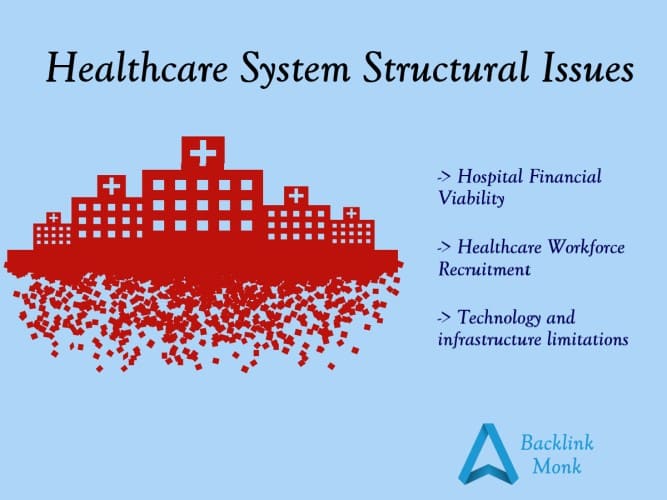
- Hospital financial viability: Rural hospitals usually face many challenges, one of them is financial challenge, that includes smaller patient volumes, higher percentages of the medicare needs with lower reimbursement rates, and the difficulties achieving economies of scale.
- Healthcare Workforce Recruitment: Recruiting and retaining the medical care professionals in the rural areas presents various persistent challenges related to the professional isolations, limited career advancement opportunities and lower compensation in comparison with urban settings.
- Technology and infrastructure limitations: approximately 21% of the rural Americans lack high-speed internet access that is necessary for facilities like, telehealth, electronic health records and many other digital health tools that could help in bridging the access gaps. And helps in making things available for all.
Conclusion
The disparities between urban and rural healthcare represent not just a geographic divide but a fundamental equity challenge for our medical system. While technology, workforce innovations, and payment reforms offer promising paths forward, sustainable solutions will require recognizing rural healthcare not as a scaled-down version of urban models but as a distinct system with unique needs and strengths.
By addressing both access barriers and underlying social and economic factors, we can work toward a future where a person’s zip code no longer determines their health results or access to the treatment. This will require sustained commitment from policymakers, healthcare organisations and community leaders. The potential benefits in lives improved and communities strengthened to make this investment essential to the health of the nation as a whole.