

AI also known as Artificial Intelligence, is one of the most important sector of the future as it helps humans to take decisions based on the ability of computer systems. The role of AI is not only limited to general problem solving and decision making but it is also playing an important role in the field of healthcare and medicine.
Use of AI has improved the diagnostic accuracy by many times and it also helped in early detection of the disease which led to early treatment and thus reduced the need for invasive procedures and complex treatment plans for example the use of AI can analyze mammograms to find the early stage of breast cancers.
Personalised Treatment
Artificial intelligence is also used in personalized treatments such as creating tailored therapies for a patient based on their medical history and genetics as well as it also helps in keeping in eye on the patient’s recovery by analyzing the available data. This real-time data also helps in providing the future pathway or recovery of the patient.
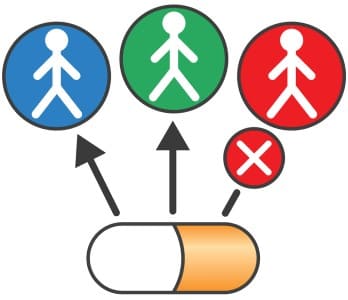
The researchers are also using AI for drug discoveries by using the available properties data of the potential drug candidates. AI in medicine is playing a key role by helping the researchers in many ways as it also helps in precision medicine where the treatments are provided to the patients in a personalized way thus helping to find the exact impact of the medicine on the particular patients.
Streamlined operations
Nowadays many hospitals are using AI to optimize their workflows like they are using artificial intelligence for scheduling as well as for resource allocation to the required facilities. AI is also helping them to find the peak hours and days where the medical institution requires more work force as compared to regular times thus helping them to hire more temporary staff to reduce burden on their facilities. AI is also helping in predictions based on the past data like it can help the hospital by predicting the number of patients coming for OPD consultations as well as it can analyze the Inpatient data to find available facilities in the future which ultimately helps in reducing the administrative Burden.
Improved Patient Care
Artificial intelligence is playing a key role in improving the patient care like by using remote monitoring, AI can have the required data based on which it can help to take the decisions as well as inform the medical practitioners about the future course of required actions. Nowadays virtual assistant like chatbots which are powered by AI are regularly used on the website of hospitals and medical institutions as well as they are being used in the hospitals to provide 24/7 support to patients and their family members.
Surgical procedures
Robotics surgery is one of the field where role of AI has changed the healthcare field drastically as it provides precision, flexibility, and minimally invasive surgery which has improved the patient care. Many hospitals in Miami of Florida are using robotic surgery and minimally invasive surgery as well as they are using AI in surgical visualization which is helping them in complex surgeries that is attracting a lot of people around the world for medical tourism.
Conclusion
There are many uses of artificial intelligence in healthcare and medical fields like in robotic surgery, medical diagnosis, in minimal invasive surgery, drug discoveries or for taking medical decisions, AI can greatly improve the capability of medical practitioners and researchers. While there are many benefits of AI in the field of medicine and health, there are also some ethical considerations like data security, data manipulations, transparency, as well as fairness in creating AI applications. While there are many benefits and challenges of AI in health care, there is also an opportunity in front of us to make it much better and to use it to its full potential.
